email: info(at)go-eu.com
phone: +49 (0)89 90 42 23 60




supported with business planning and cross-border advisory.

Table of contents:
1.) Business guidance for Bulgaria
2.) Scope of our private consulting
3.) Consulting fees & typical third-party costs
4.) Why entrepreneurs consider Bulgaria
5.) Common practical challenges
6.) Our office location
1.) Business guidance for Bulgaria
We are a private consulting company and are not affiliated with any government authority.
30 March 2026
18998
0
This page is intended for entrepreneurs who want to understand the practical, tax and operational framework for doing business in Bulgaria. Our role is limited to private consulting, coordination support and informational guidance. Official registrations, approvals, business identifiers and filings are issued or processed only by the competent public authorities and regulated professionals.
Important notice: GO EU is a private consulting company. We do not present ourselves as a government service and we are not affiliated with the Bulgarian Commercial Register, tax authorities or any other public institution.
What this page covers
Entrepreneurs usually have the same early questions: Which legal structure is commonly used? What are the tax basics? Which compliance topics should be reviewed in advance? How difficult is banking? What should be planned before operations begin? The sections below answer these questions from an advisory perspective.
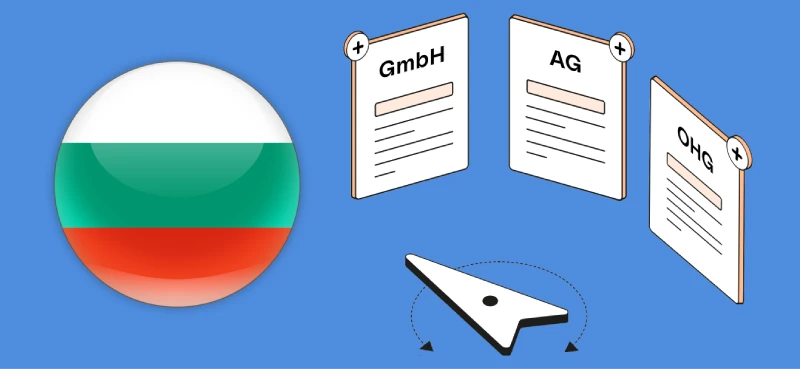
General information on common legal structures
Foreign entrepreneurs often compare structures such as an OOD / EOOD with other forms depending on ownership, liability, substance, accounting needs and long-term tax planning. The appropriate structure depends on the founder's residence, management model, operational footprint, clients, staffing, and where decisions are effectively made.

For many smaller businesses, an OOD or EOOD may be considered because it is widely used and familiar to local service providers. However, there is no universal solution. Founders should obtain legal and tax advice tailored to their actual facts before choosing a structure.
2.) Scope of our private consulting
Our service should be described as business consulting, not as an official registration service. We help clients understand what to prepare and which local specialists may be needed. This can include:
- ✅ Initial consultation on business plans for Bulgaria
- ✅ General guidance on legal structure options and practical implications
- ✅ Coordination with local accountants, lawyers or other regulated providers where required
- ✅ Information support regarding tax, accounting and operational planning
- ✅ Guidance on timelines, documents and practical next steps
- ✅ Support for understanding common banking and substance questions
- ✅ Ongoing communication support in English
We do not advertise or represent ourselves as a government office, registry, or official filing portal. We also do not imply that we issue official numbers, approvals or register entries ourselves.
Questions about doing business in Bulgaria?
Request a consultation
Private advisory support for entrepreneurs. Typical response within one business day.
Or call us: +49 (0)89 90 42 23 60
Typical planning topics before market entry
- Choice of legal structure and ownership model
- Management location and tax residence considerations
- Accounting setup and reporting obligations
- Commercial address, staffing and local substance questions
- Banking and payment workflow planning
- Cross-border invoicing, VAT and operational processes
- Coordination with local regulated professionals
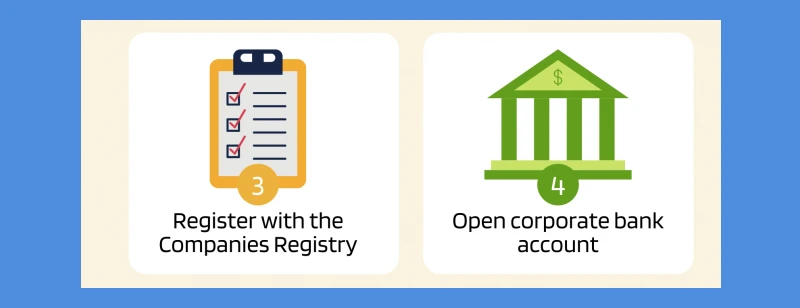
Typical information founders review in advance
- Ownership and shareholding plan
- Planned activity and commercial scope
- Where management decisions will be taken
- Expected turnover, staffing and office needs
- Banking, payment and accounting workflow
3.) Consulting fees & typical third-party costs
Costs vary depending on the project scope, the number of founders, document complexity, language needs and whether additional regulated service providers are involved. For transparency, it helps to distinguish between our private consulting fees and third-party costs that may arise through lawyers, notaries, translators, accountants, banks or public authorities.
- ✅ Initial consulting and planning support
- ✅ Coordination support with third-party professionals
- ✅ Translation, certification or notarial costs where applicable
- ✅ Accounting onboarding and recurring accounting fees
- ✅ Banking-related onboarding requirements, depending on provider
- ✅ Optional support for operational setup and communications

Important: Some costs depend on third parties and cannot be guaranteed by a private consulting company. Banking outcomes, tax treatment and acceptance of documents depend on the relevant institution and the facts of each case.
Need a project-based quote?
Request a consultation
We are happy to discuss your planned activity, timeline and support needs.
Operational guidance and local coordination
Entrepreneurs often benefit from a local advisory partner because Bulgaria can be attractive on paper while still requiring careful execution in practice. Communication with accountants, banks, landlords, translators and other local providers can be time-consuming without local support.
4.) Why entrepreneurs consider Bulgaria
Bulgaria is often considered because it combines EU membership with comparatively low operating costs. For some founders, the appeal lies in the tax environment; for others, in staffing, proximity to European markets or personal relocation plans.
1. Competitive tax environment
Bulgaria is known for a relatively simple corporate and personal tax system. That does not mean every structure is automatically efficient. The actual outcome depends on residence, management, deductible expenses, transfer pricing, permanent establishment risks and the applicable tax treaty position.

2. Lower operating and labor costs
Compared with many Western European markets, Bulgaria may offer lower salary and overhead levels. This can make it interesting for service businesses, production, logistics and selected tech functions, depending on the local hiring market and language requirements.
3. Flexible business planning options
Some entrepreneurs appreciate the combination of lower costs, EU market access and a manageable local market. For the right business model, this can make Bulgaria a practical base for regional operations. Founders should still review substance, compliance and banking carefully before making commitments.

Would you like to assess whether Bulgaria fits your business model?
Request a consultation
Private advisory for entrepreneurs evaluating tax, operational and cross-border questions.
Business planning in Bulgaria can be attractive, but it should be approached carefully
At first glance, Bulgaria can sound very appealing because of low taxes, lower living costs and EU access. In practice, however, the success of a cross-border structure depends on the details: residency, management, operational substance, accounting discipline, banking and long-term compliance.
Good planning matters more than marketing slogans. Entrepreneurs should avoid oversimplified promises and review the facts of their own case carefully.
The advantages of Bulgaria at a glance:
5.) Common practical challenges
1. Tax substance and deductibility need careful review
It is a mistake to assume that a low headline tax rate automatically makes every structure advantageous. The actual tax burden depends on how expenses are documented, where management takes place, whether the business has sufficient substance, and how home-country tax authorities assess the arrangement.

Cross-border founders should therefore review deductibility, compliance standards, transfer pricing, management location and treaty issues with qualified professionals before making decisions.
2. Banking can require patience
Bank account opening can be straightforward in some cases and difficult in others. Outcomes vary by provider, founder profile, source-of-funds review, expected business activity and documentation. No private consultant can promise bank approval in advance.

That is why founders should plan for due diligence questions, alternative providers and realistic timelines.
3. Language, administration and local execution
Language barriers, administrative formalities and practical coordination can slow projects down. Even when the long-term business case is strong, day-to-day execution may still require local support, reliable partners and enough time for formalities.
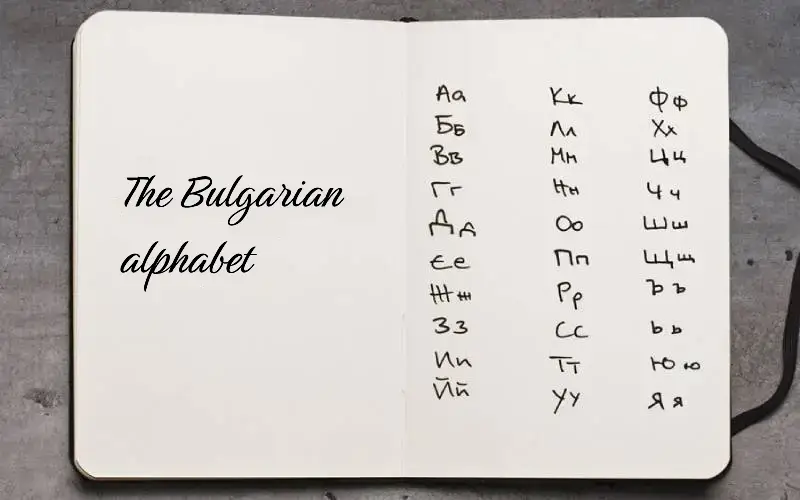
Our office in Bulgaria
➼ More information:
➔ About us: The team behind GO EU➔ Taxes in Bulgaria: Tax overview 2026
➔ Business for foreigners: Doing business in Bulgaria as a foreign entrepreneur
➔ Accounting services: Accounting support in Bulgaria
Private business consulting for Bulgaria
Request a consultation
GO EU Team
Updated on 30 March, 2026
For transparency: this page has been rewritten as a private consulting and information and communications. It is not intended to represent or advertise an official government filing or registry service.